The list runs from small prizes and a gratitude hunt to a photo cutout, parade sheets and magnifying glass clue cards, and the age of your youngest player decides which one fits.
Setting matters too: the photo cutout suits a yard or park walk, the parade sheets keep kids in front of the TV, and the timing section shows how to buy the cook some quiet kitchen time.
1. Small Prizes
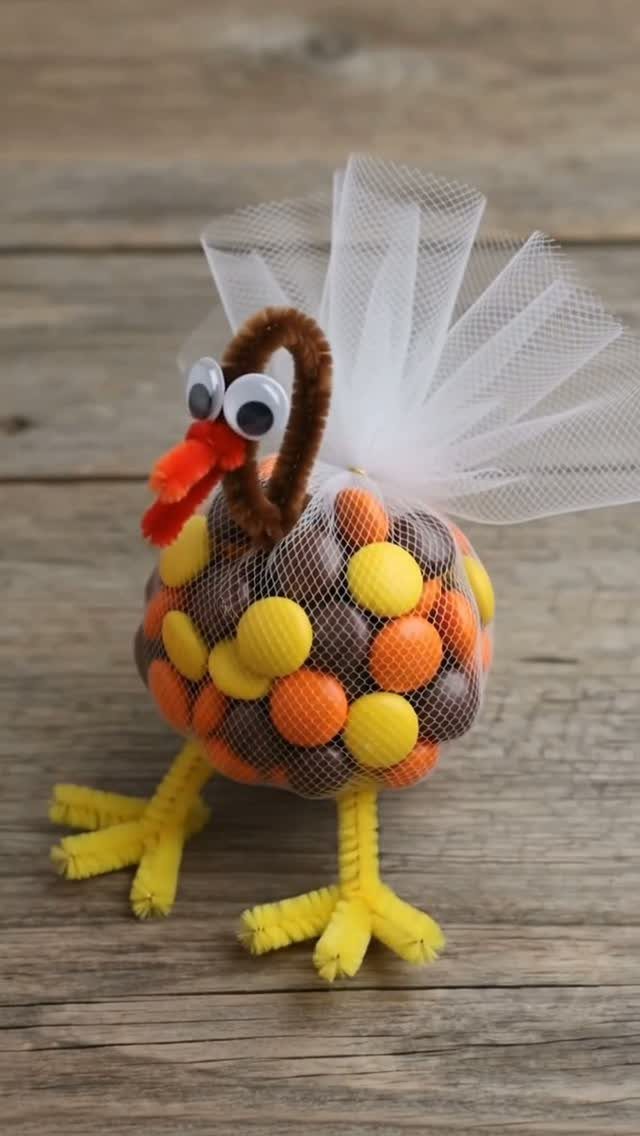
Make 1 treat bag for each child, and hand it over at the finish so the hunt ends with something to carry home.
Hand them out at the finish line instead of during the hunt, so nobody gets sidetracked. Make them the night before; the tulle holds its shape fine overnight.
2. Gratitude Hunt
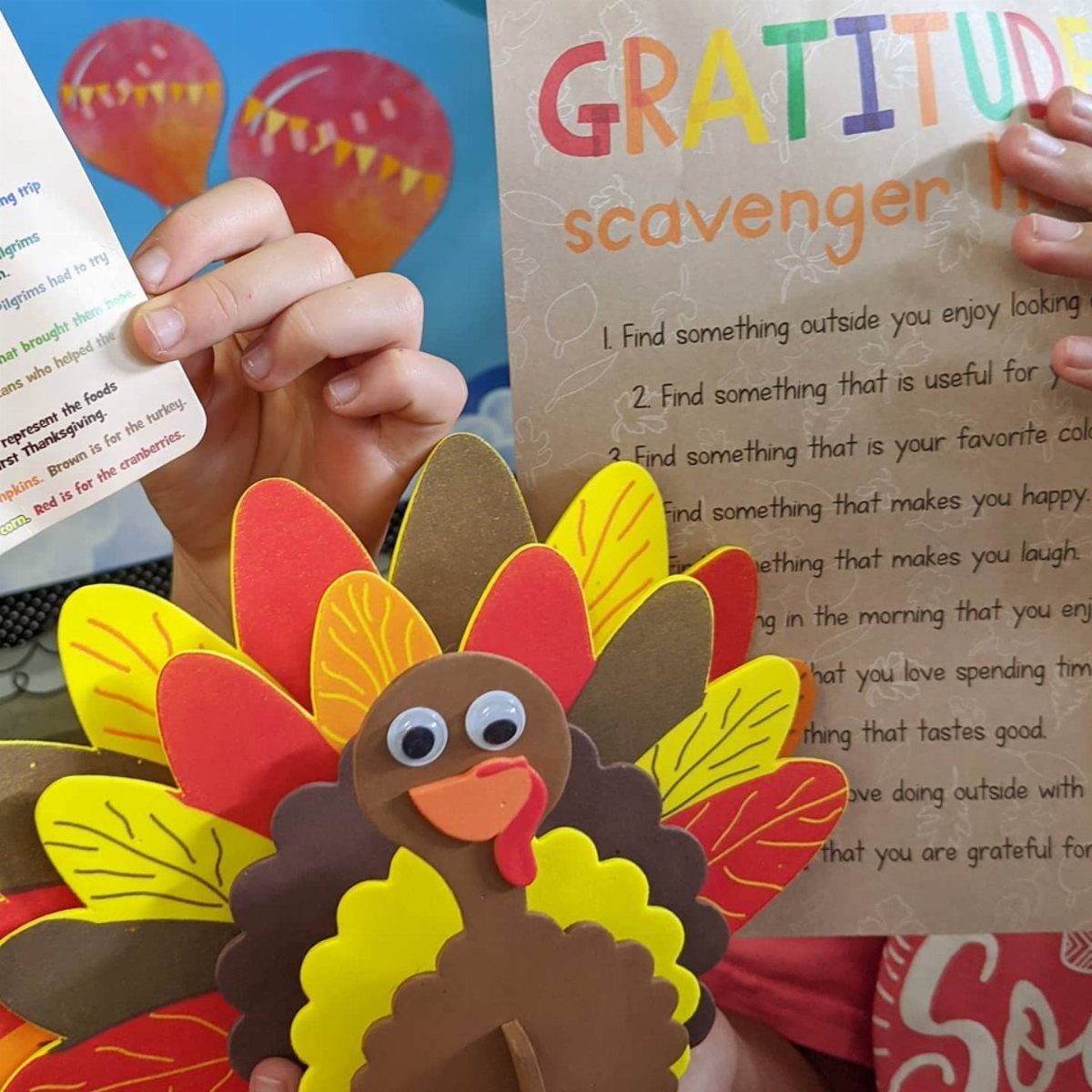
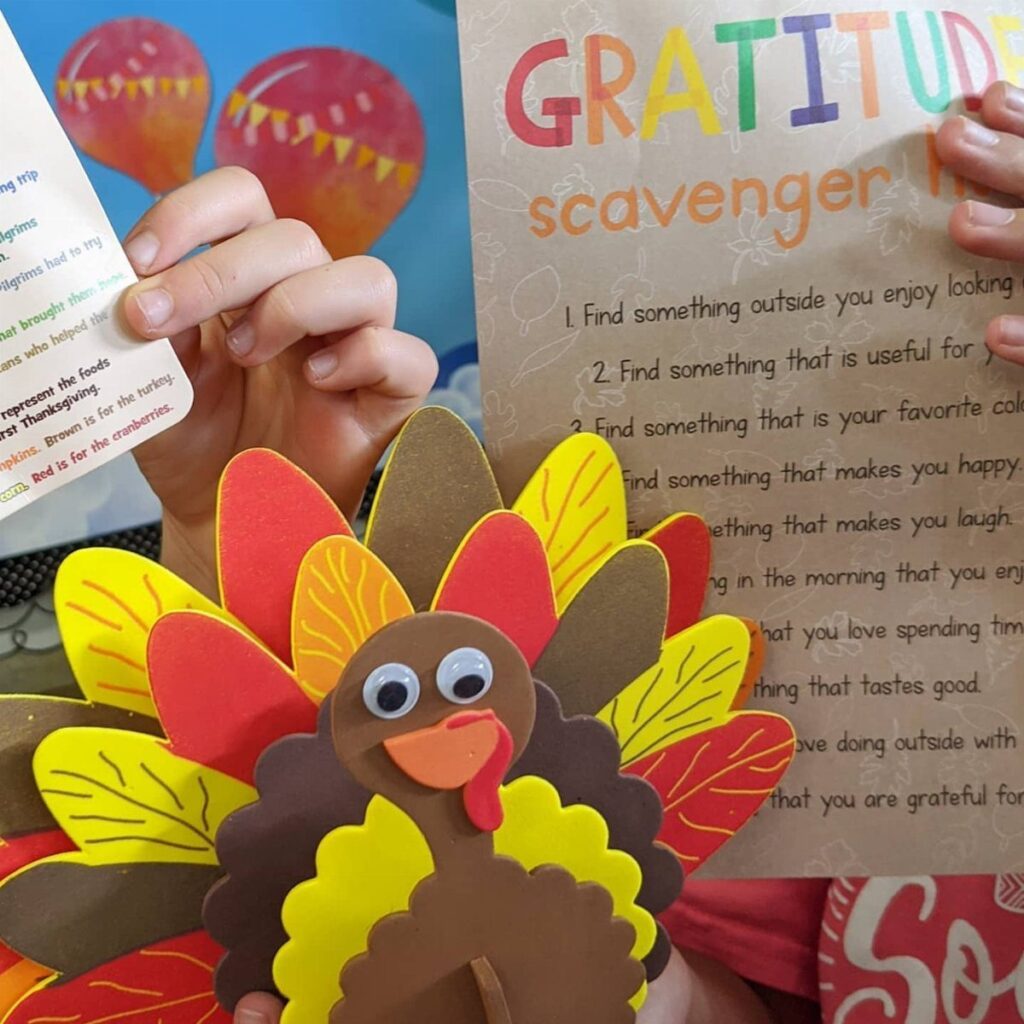
Instead of hunting for objects, kids hunt for things that stand for thankfulness, and that shifts the mood of the whole game. A printed "GRATITUDE scavenger hunt" list on one sheet is enough.
Write prompts a young child can answer by looking around: something that keeps you warm, something that belongs to a person you love, something that makes you laugh.
Pair the list with a small paper turkey craft, so each child has something to color while the grown-ups finish cooking.
3. Photo Scavenger Hunt Cutout
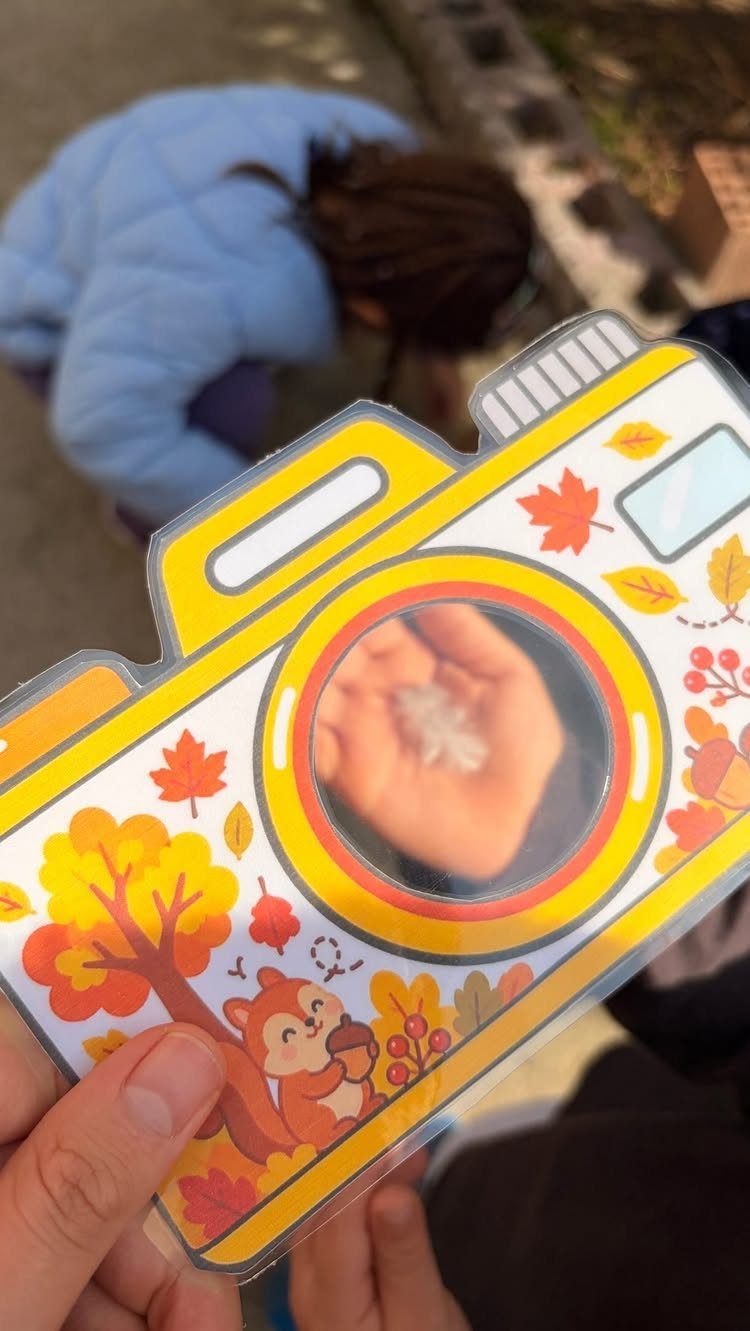
Kids frame each find through a yellow cardboard camera cutout, so the hunt ends with photos instead of a pile of collected objects.
Paint or print autumn leaves and a squirrel around the cutout’s face hole, and a plain piece of cardboard starts to look like a seasonal prop that guests will want to pose with.
This suits an outdoor yard or park walk, since nothing has to be picked up or carried back.
Cut one camera per child, because sharing a single viewfinder ends in arguments. A phone in an adult’s hand can take the actual picture.
4. Parade Watch Scavenger Hunt
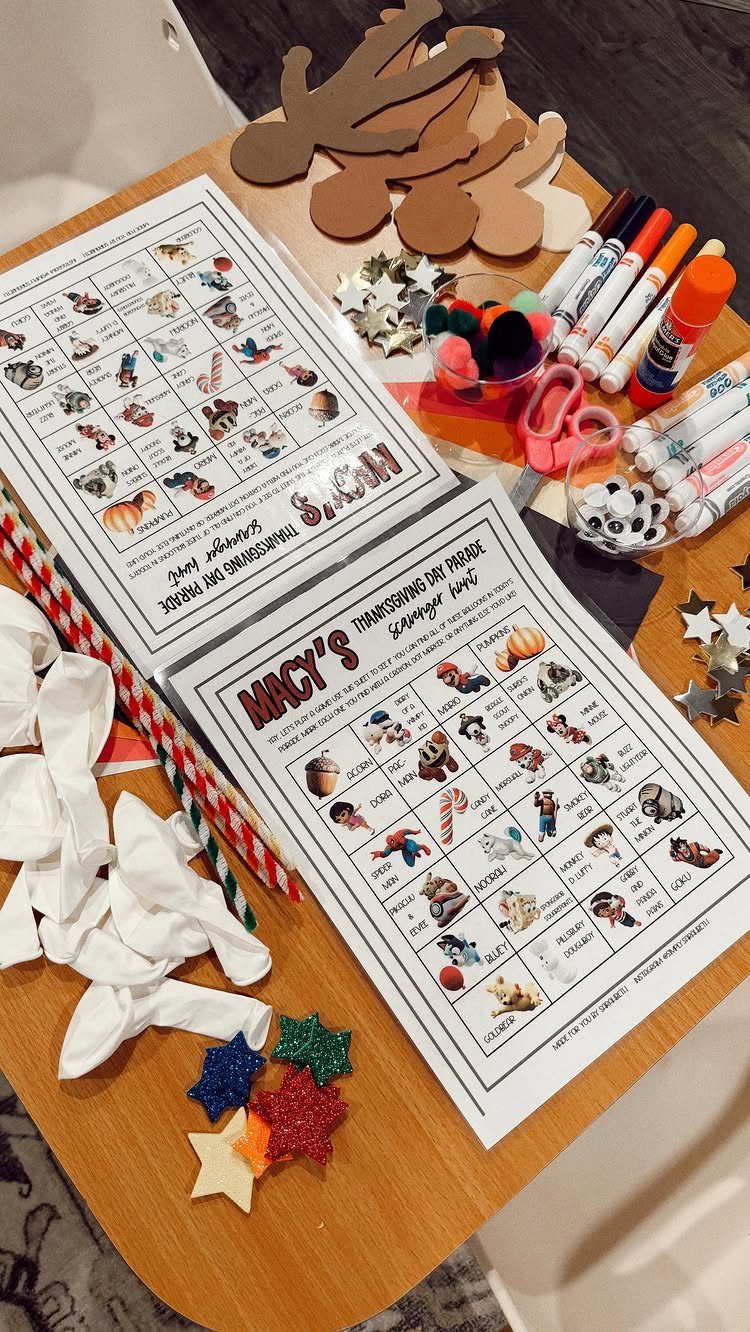
Print the sheets before the TV goes on. A "Macy’s Thanksgiving Day Parade Scavenger Hunt" page lets kids tick off what they spot while the parade plays, which keeps them in the room and watching.
Set out markers, scissors, pom poms, glitter stars and white fabric pieces nearby, so restless kids can craft between sightings. I would print two copies per child; one always gets lost or colored on.
5. Magnifying Glass Clue Cards
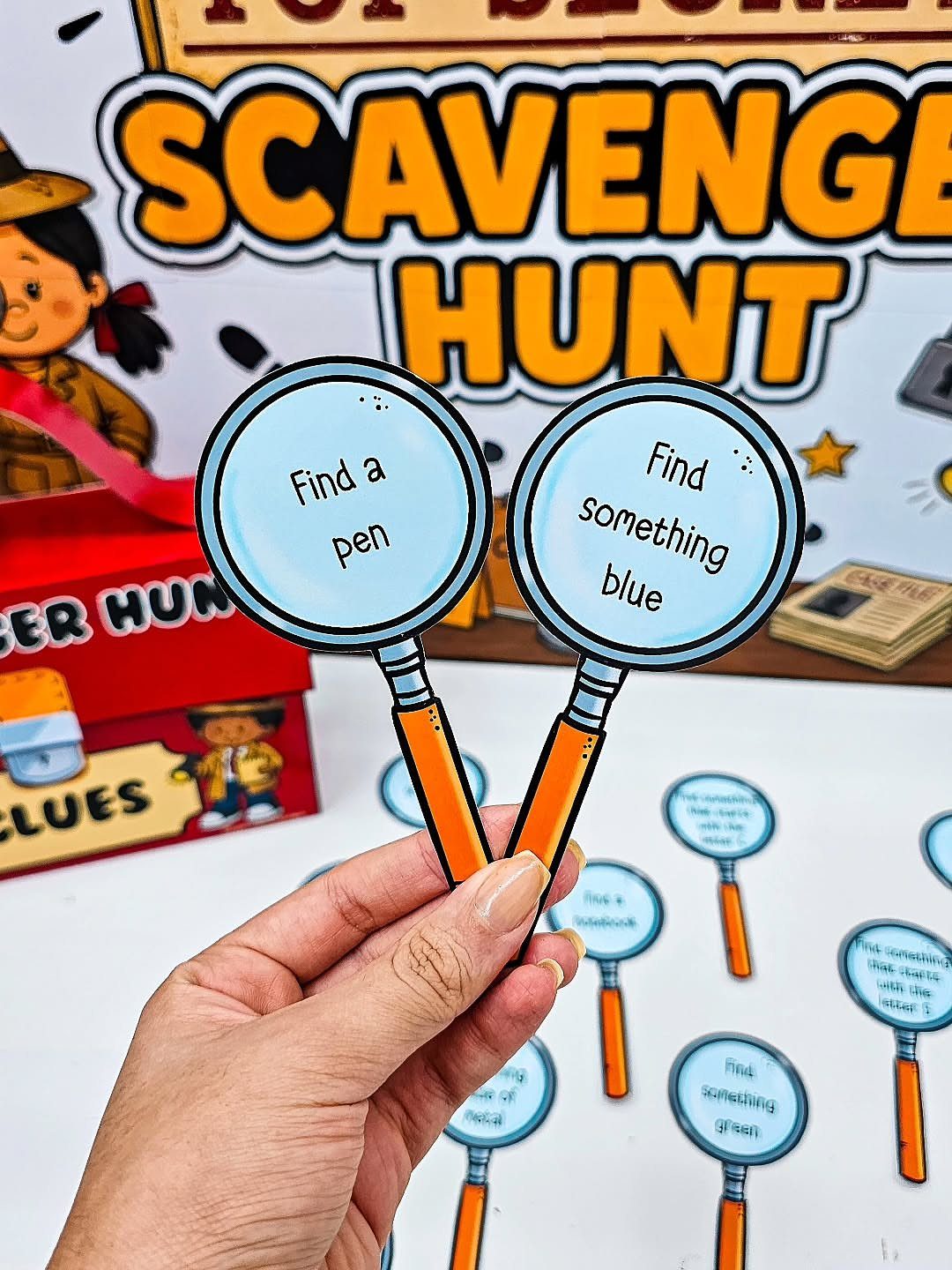
Magnifying glass shapes cut from cardstock make each clue feel like detective gear. Keep the prompts short and concrete, such as "Find a pen" or "Find something blue," so even a non-reader can match them with an adult’s help.
Make a stack of them and let each child draw one at a time.
Add a "SCAVENGE HUNT" sign near the stack so everyone knows where to start. Cut extra cards, since the quick prompts get finished fast.
Engaging All Ages
Toddlers need pictures, not words. A drawing of a pumpkin or a leaf on a card lets a 2-year-old join in without reading a single clue.
Elementary-aged kids can handle rhyming clues or easy riddles, which add a little challenge without frustration. Older kids want more: multi-step puzzles or Thanksgiving trivia keep them from drifting off to a screen.
Grandparents fit in as teammates. Pair one with a toddler as the "reader," and both have a job.
Running the same hunt at 3 difficulty levels is simple if you color-code the clue cards by age. Giving each group its own color also stops the older kids from grabbing the easy ones.
A good hunt also gives restless kids a job, which buys the cook 20–30 minutes of quieter time in the kitchen.
Timing the Scavenger Hunt
Pick a window when kids are full of energy, never right before a nap. A cranky child will not enjoy any clue, however clever.
Hide things where they take some work to reach. A little running tires them out, which makes the sit-down meal calmer.
Use the space to your advantage. Weather and room decide whether you play indoors, outdoors or both, so check the forecast the day before and keep an indoor backup ready.
Match the clues to the youngest player’s age so nobody gets stuck and frustrated.
A small prize for every player, like a pack of stickers or a mini pie, heads off any cousin debate about who actually won. Everyone can win on Thanksgiving, and the meal goes more peacefully.
Creating a Memorable Experience
Running the hunt as a yearly habit, with prompts that get people talking, is what turns it into a family tradition.
Run it at the same point in the day each year, and keep one or two clues that never change.
Ask each child to read the answer aloud when they find a card, so the hunt sparks conversation instead of a silent dash.
Write down a few of the answers each year and keep them in a folder. Next November, the older answers are fun to read back.
The aim is simple: kids who interact, think and play together, and a house that stays calm until dinner.
Frequently Asked Questions
What are some fun activities I can do on Thanksgiving?
A scavenger hunt for the kids is an easy one. A hunt gives restless kids a task with a finish line, and that frees the cook for a solid half hour at the stove.
Run it before the meal, because kids who have done some running around sit more calmly at the table.
What are some good scavenger hunt clues?
Match the clue to the youngest player.
For non-readers, short prompts like "Find something blue" work well with an adult helping. Themed clues about turkeys and pumpkins keep the hunt feeling like Thanksgiving.
What is a scavenger hunt event?
It is a game where players search for specific items or complete set tasks.
For Thanksgiving, that might mean kids ticking off sights on a parade sheet, finding things that stand for thankfulness, or snapping photos of each find through a cardboard camera frame.
The format is flexible enough to play indoors, in a yard or at a park.
How do you do a Thanksgiving scavenger hunt?
Pick a format, then write clues the youngest child can solve. A gratitude hunt works with one printed sheet of prompts such as something that keeps you warm or something that makes you laugh.
Give every player a small prize at the end, a sticker or a mini pie works, and nobody has a reason to argue over who won.