All 3 of these indoor team building games cost close to nothing: paper and scissors, a few dollars of plastic cups, or cardboard discs and string.
Paper Tower, the Cup Grab and String Drawing all work indoors, but they differ in how much floor, noise and table space each one asks of your room.
A group under 6 does better with the String Drawing Challenge, since there’s nowhere to hide, while the Head-Shoulders-Knees Cup Grab needs cleared floor space and a way for people to sit out without a spotlight on them.
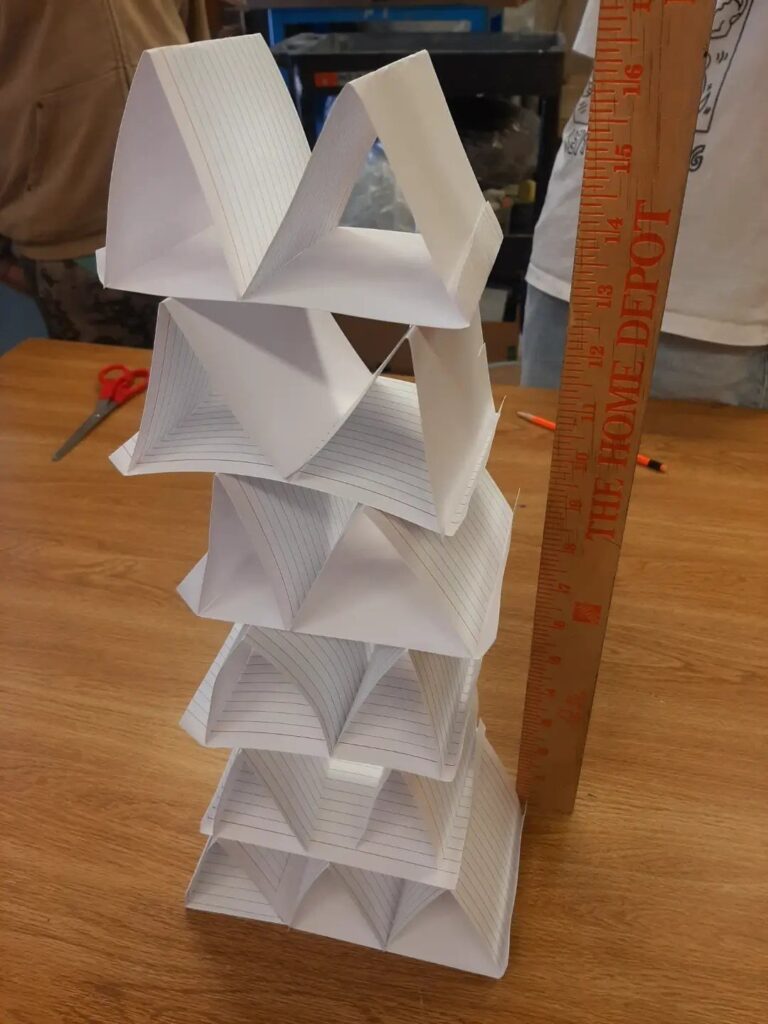
The paper tower is the easiest to run anywhere, because a yardstick settles the winner.
1. Paper Tower
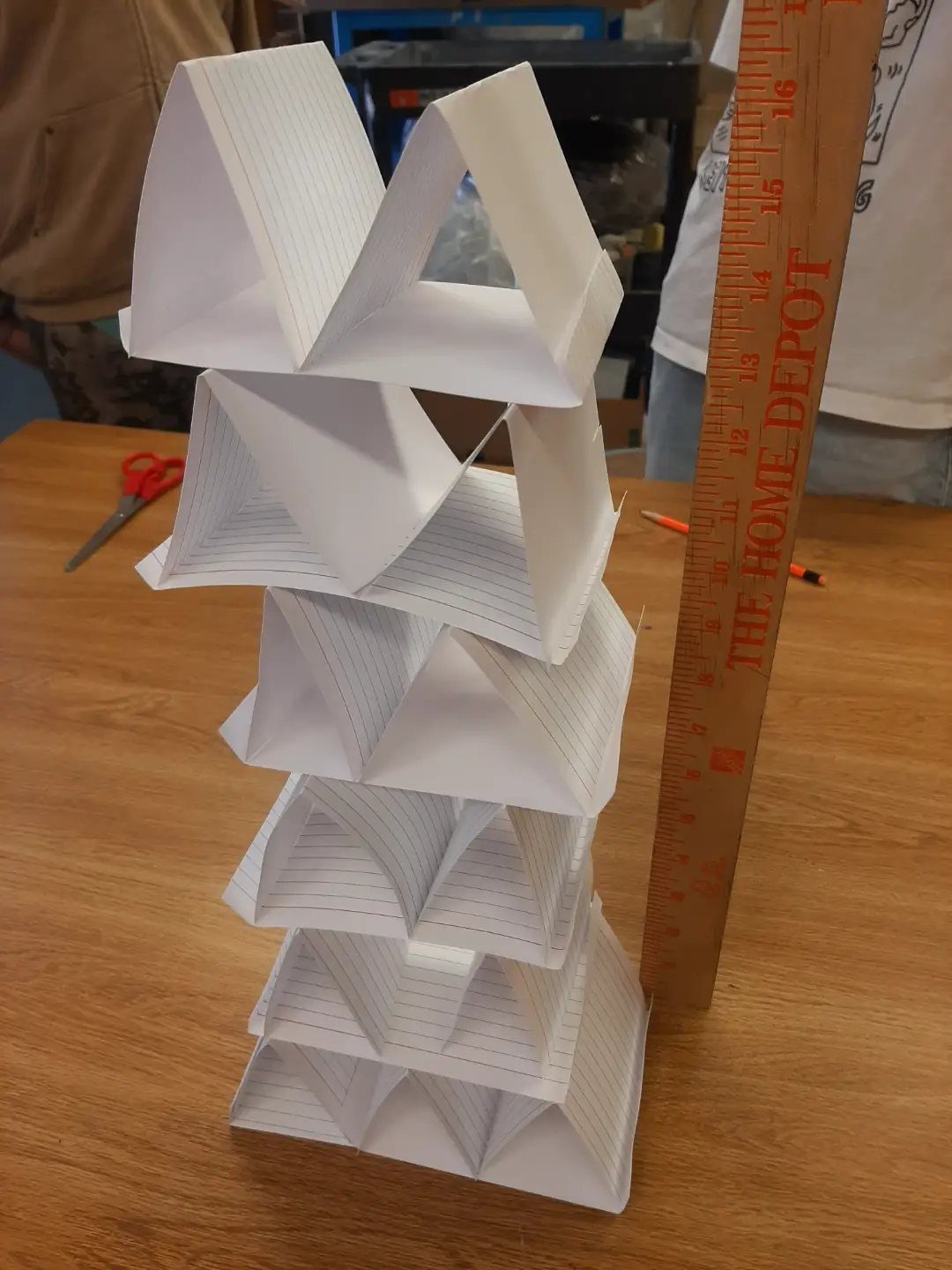
Folded lined paper is enough to build a decent tower, and a yardstick on the table settles the winner without any argument.
Give each team the same stack of sheets and scissors, set a time limit, and measure when the clock stops.
Cost is close to nothing, since most offices already have paper. Decide up front whether tape is allowed; folding and cutting alone makes for a harder, more inventive round.
2. Head-Shoulders-Knees Cup Grab
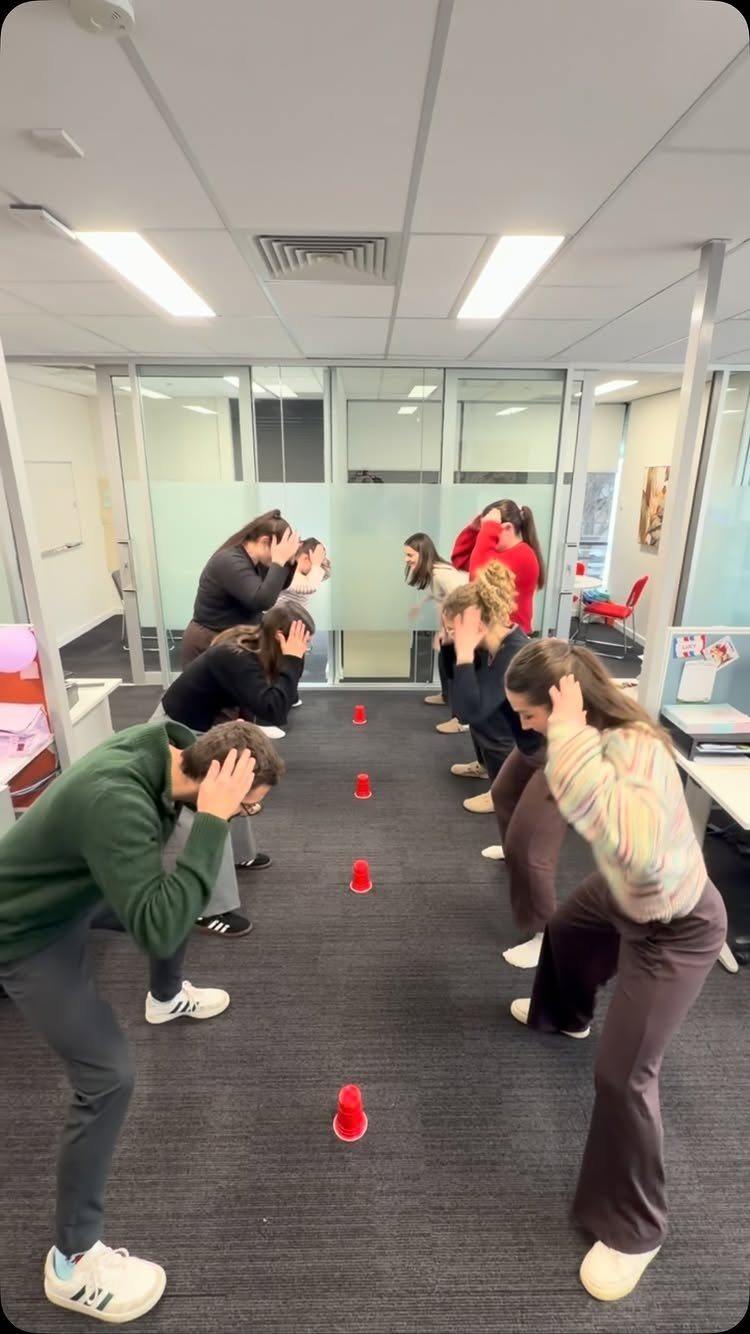
2 lines of coworkers face each other, hands on their heads, with plastic cups lying on the floor between them. Cups cost a few dollars, and the game needs no setup beyond clearing floor space.
Use one fewer cup than players on a side so someone always misses out. Keep rounds short; the laughing wears off after a handful of them.
3. Team String Drawing Challenge
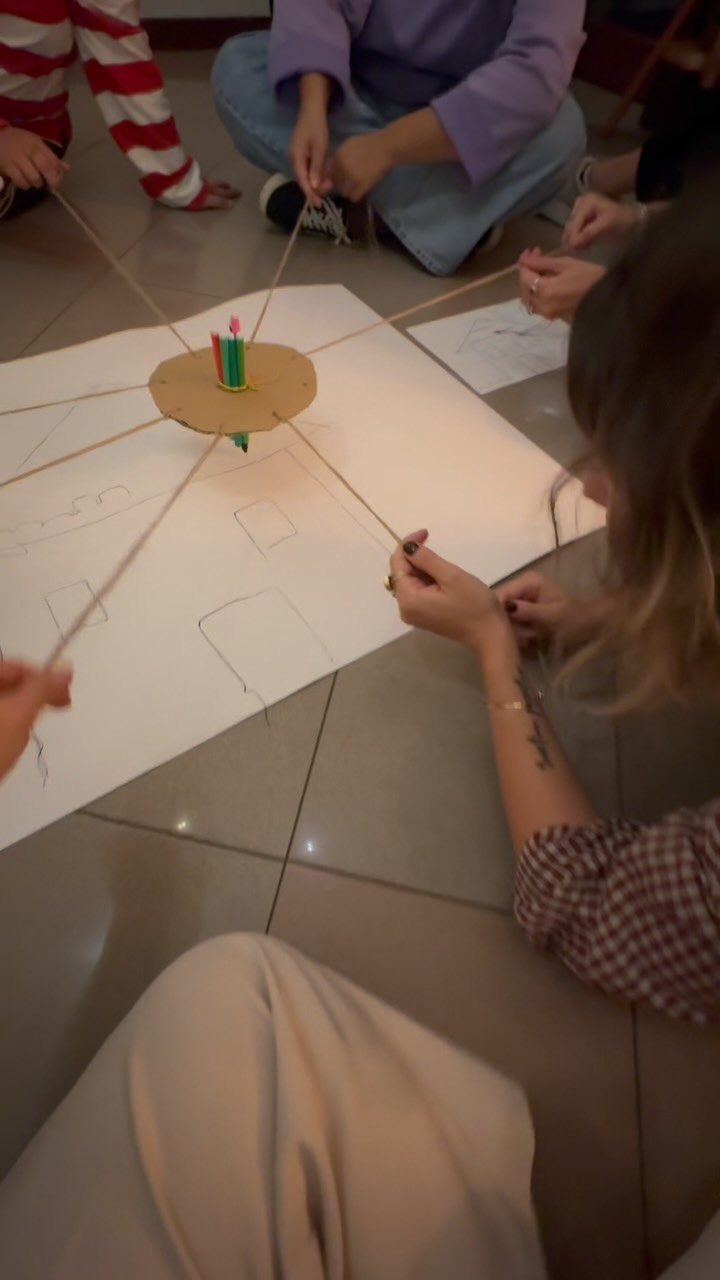
Marker-holding cardboard discs tied to strings let a group draw one picture without anyone touching the pen directly.
Each person pulls a string while seated around a big sheet of paper, so the drawing only works if the group agrees on where to pull.
Tape the paper to the floor first so it doesn’t slide. I’d ask the team to draw something specific, like a house or a face, because a scribble teaches nothing.
Benefits of Team Building
Indoor team building works on communication, collaboration and trust, and those three tend to show up later as better morale and people who stay. The activities don’t have to be expensive, long or complicated to have that effect.
Indoor also means the whole team can join without anyone traveling, which makes it easy to repeat.
A 5-minute icebreaker before a meeting and a full planned afternoon both work, as long as colleagues end up talking to each other differently than they do over email.
I’d treat it as a steady habit rather than a single big day. Small, regular sessions give people more chances to build trust than one event a year.
Team-building games foster camaraderie, communication, and leadership skills, helping teams build stronger relationships outside of work. As Ashley Frabasilio, Employee Engagement Manager at Asana, says, “Shared experiences help teams build trust and encourage collaboration.”
— Asana
Choosing the Right Activity
Before I pick a game, I run through 4 questions: what the group needs to practice, how much time there is, how many people are playing, and how much room the space allows.
Let length follow purpose.
Short sessions fit social bonding best, and longer blocks give people room to build skills. A team that needs 15 minutes of laughter before a tough meeting will not thank you for a 90-minute program.
Groups under six do better with pairs or trios, since there’s nowhere to hide.
Anything physical needs someone watching, clear boundaries, and a way to sit out without drawing attention. Silent brainstorming and written reflection are quiet, and they still bring people closer.
If your team is new or barely knows each other, start low on intensity.
Debriefing After Activities
Most events fail the same way: nothing changes afterward, because nobody debriefed and nobody followed up.
Spend a few minutes right after the activity tying it back to real work.
What happened in the game that also happens in your projects? ORCA is one simple framework I like for giving the debrief conversation a shape.
Then assign one specific action that comes out of it, give it an owner, and track it. One tracked action beats a long list of good intentions.
Team building works best as part of how the team already operates, not as a one-off.
Frequently Asked Questions
What are popular indoor games for adults?
Paper tower, a cup grab game and a group string drawing challenge all work well for adult teams.
For a paper tower, I hand every team identical sheets and a pair of scissors, set a timer, and let a yardstick settle who built highest.
All 3 need almost no money or setup, which makes them easy to run in an office.
What are the best indoor team building activities?
Icebreakers, problem-solving games and creative challenges cover most needs. Paper tower is a good problem-solving pick, and a group string drawing, where cardboard discs holding markers are tied to strings, suits creative work.
I pick a game by checking 4 things: what the group needs to practice, how much time there is, how many people are playing, and how much room the space allows.
Then I look for a format that won’t put the shyest person on the spot.